Frequently asked questions
Quick answers before you choose.
Do robotic pool cleaners work on both in-ground and above-ground pools?
Several models in this lineup explicitly support both pool types, but not all do. Check the product description before buying. Above-ground pools often have softer liners and different wall angles, so a cleaner confirmed for both types will handle those differences without risk of damage.
What is the difference between a robotic pool cleaner and a pressure or suction cleaner?
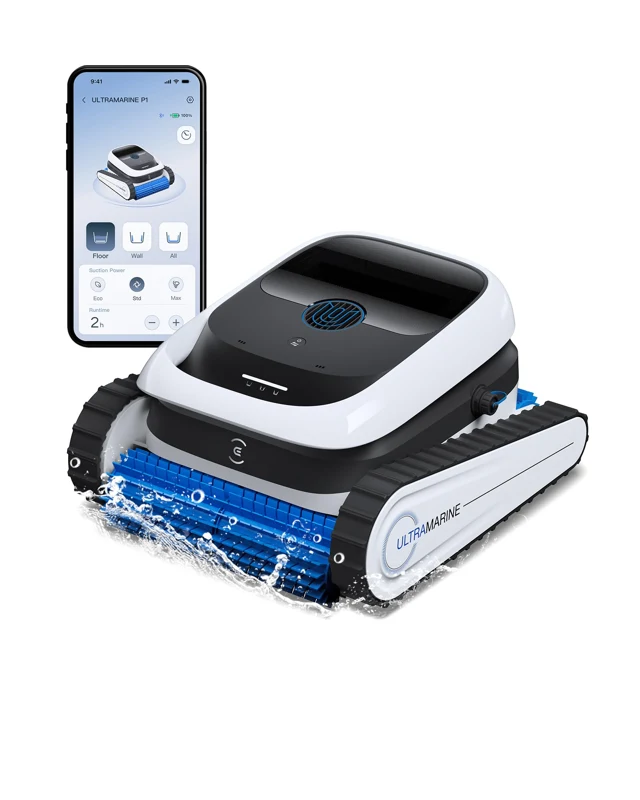
Robotic cleaners are self-contained units with their own motor, filter, and navigation. Pressure and suction cleaners rely on your pool pump to operate. Robotic models generally offer more consistent coverage and do not add load to your filtration system, though they require charging between uses.
How often should a robotic pool cleaner run each week?
For most residential pools, running the cleaner two to three times per week is enough to maintain clean surfaces. Pools surrounded by trees, used heavily, or located in dusty environments may benefit from more frequent cycles. Runtime and battery life will determine how practical a daily schedule is for your specific model.
Can a robotic pool cleaner replace manual brushing and vacuuming entirely?
For routine maintenance, a capable robotic cleaner handles most of the work. However, corners, steps, and tight areas may still need occasional manual attention depending on the model's design. Cleaners that include wall and waterline coverage reduce the amount of manual follow-up required compared to floor-only units.
Is app control a necessary feature or just a convenience?
App control is not essential for basic cleaning but adds practical value. It allows you to schedule cleaning cycles, monitor progress, and adjust settings without being present at the pool. For busy households or pools that run on a set schedule, app connectivity reduces the effort of managing the cleaner day to day.