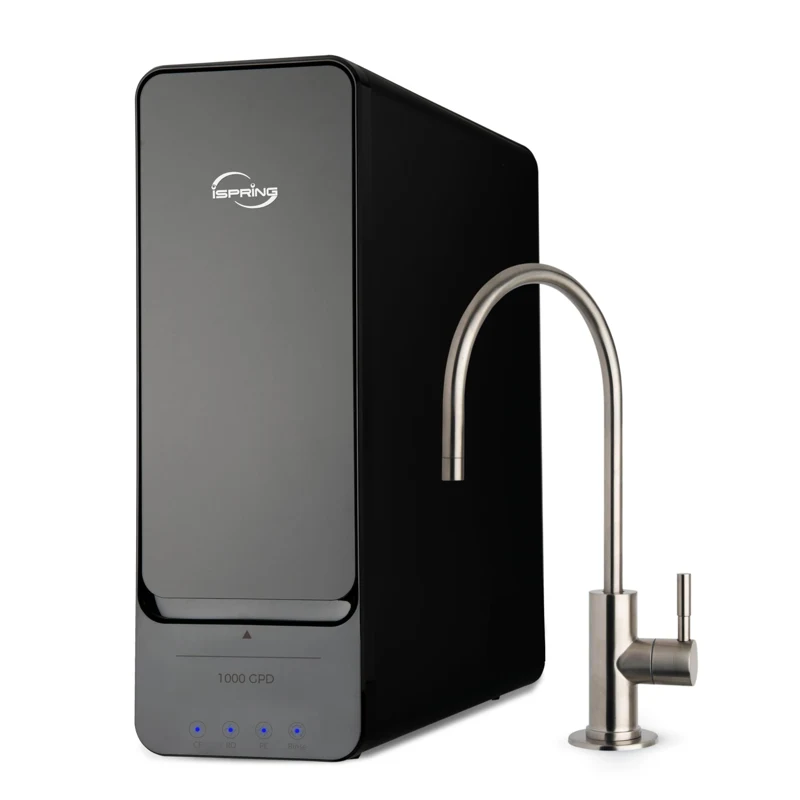
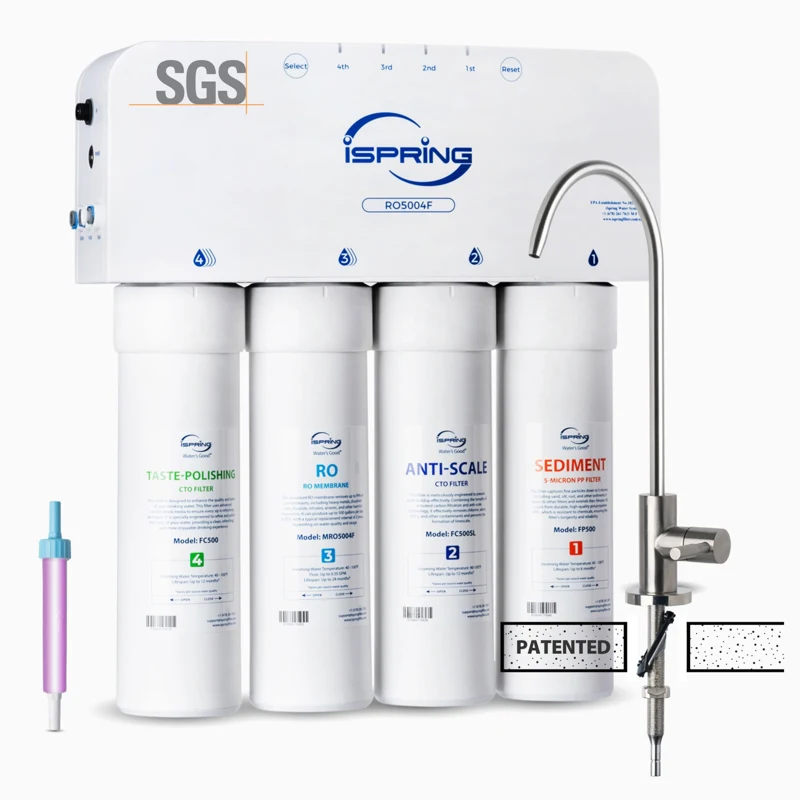
iSpring RO500AK Alkaline Tankless
- NSF 58 certification provides independent filtration verification
- 500 GPD tankless design delivers water quickly on demand
- Auto flush and filter reminder reduce ongoing maintenance guesswork
A guide for homeowners comparing under-sink RO systems, ranked by owner ratings, filtration stages, flow rate, and overall value.
| # | Product | Score | Price | Best for | ||
|---|---|---|---|---|---|---|
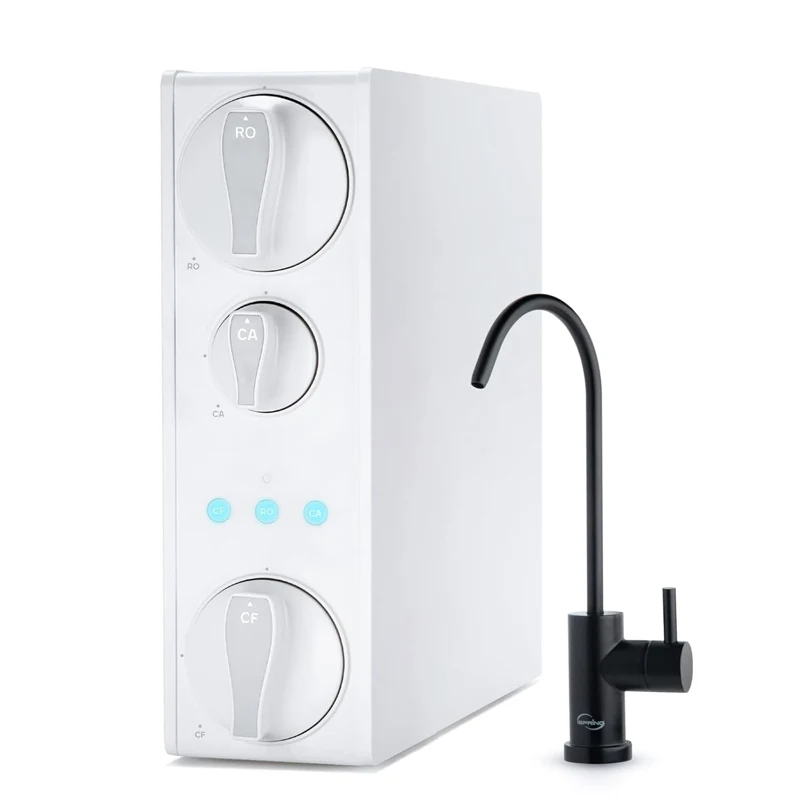
| 1 | ![]() | iSpring RO500AK Alkaline Tankless Best Overall | 9.5 | $625 | Households wanting fast flow with alkaline remineralization | Check Price โ |
| 2 | ![]() | iSpring RO1000-BN Tankless 1000 GPD Best for Large Spaces | 9.4 | $1,189 | High-demand households or small offices needing maximum flow | Check Price โ |
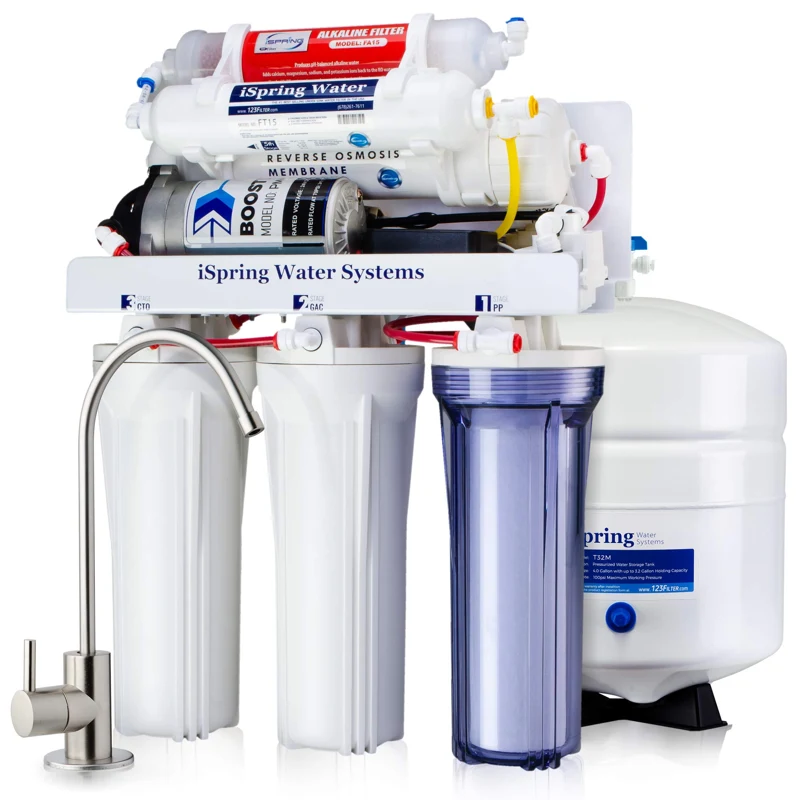
| 3 | ![]() | iSpring RCC7P-AK 6-Stage with Pump Best Upgrade | 9.6 | $390 | Homes with low water pressure needing alkaline filtration | Check Price โ |
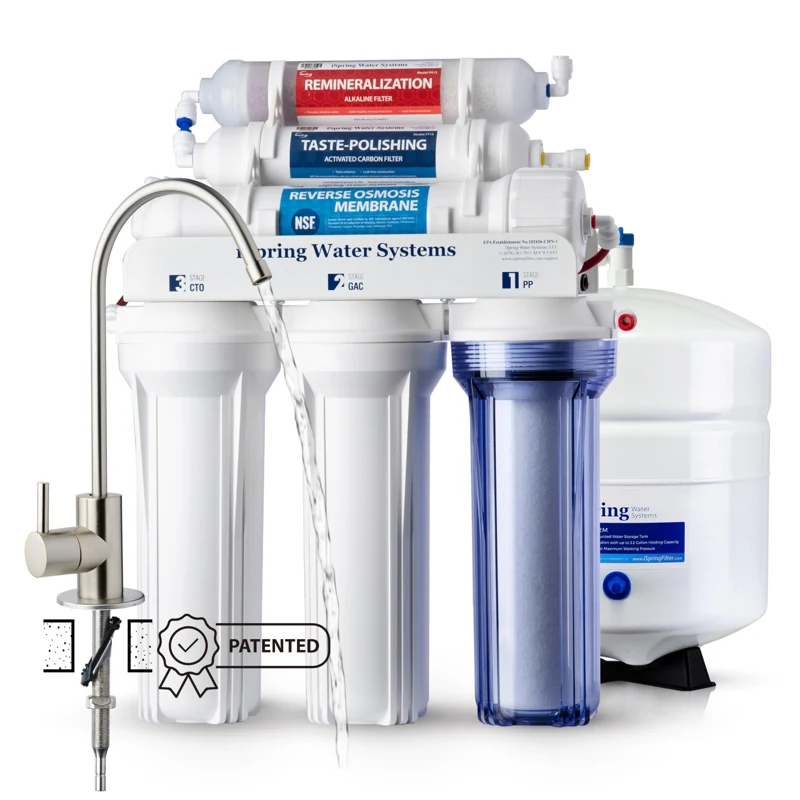
| 4 | ![]() | iSpring RCC7AK-BN NSF 75 GPD Most Popular | 9.3 | $290 | Budget-conscious buyers wanting NSF-certified alkaline filtration | Check Price โ |
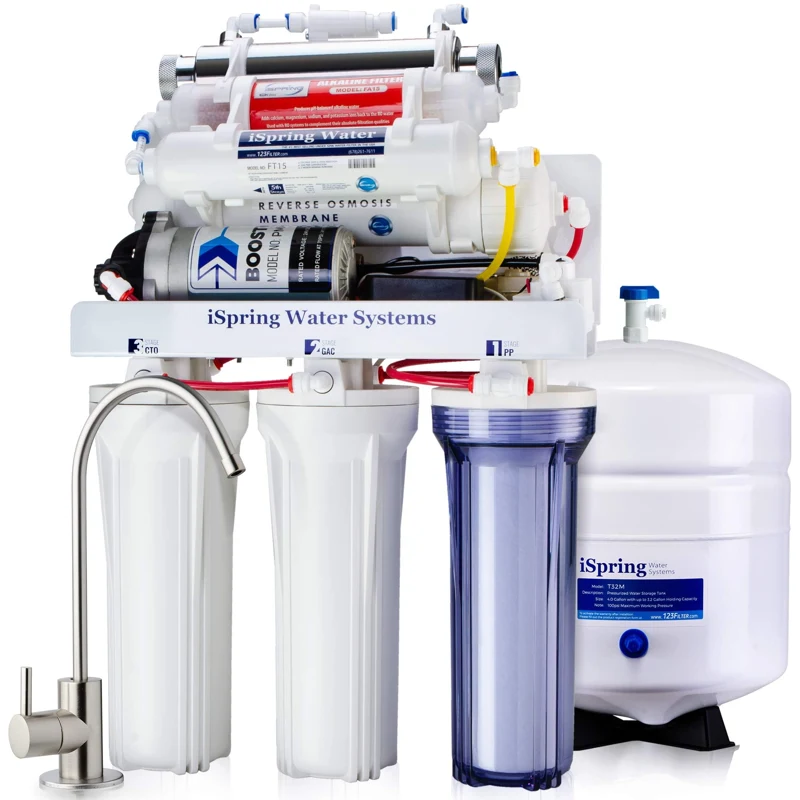
| 5 | ![]() | iSpring RCC1UP-AK 7-Stage UV Editor's Choice | 9.3 | $500 | Buyers wanting UV disinfection plus alkaline remineralization | Check Price โ |
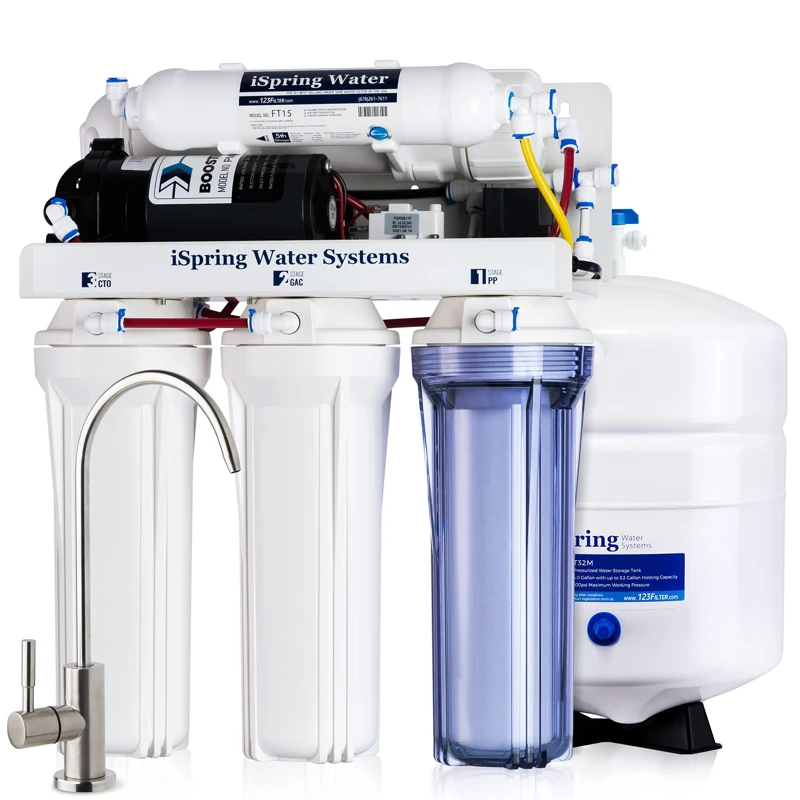
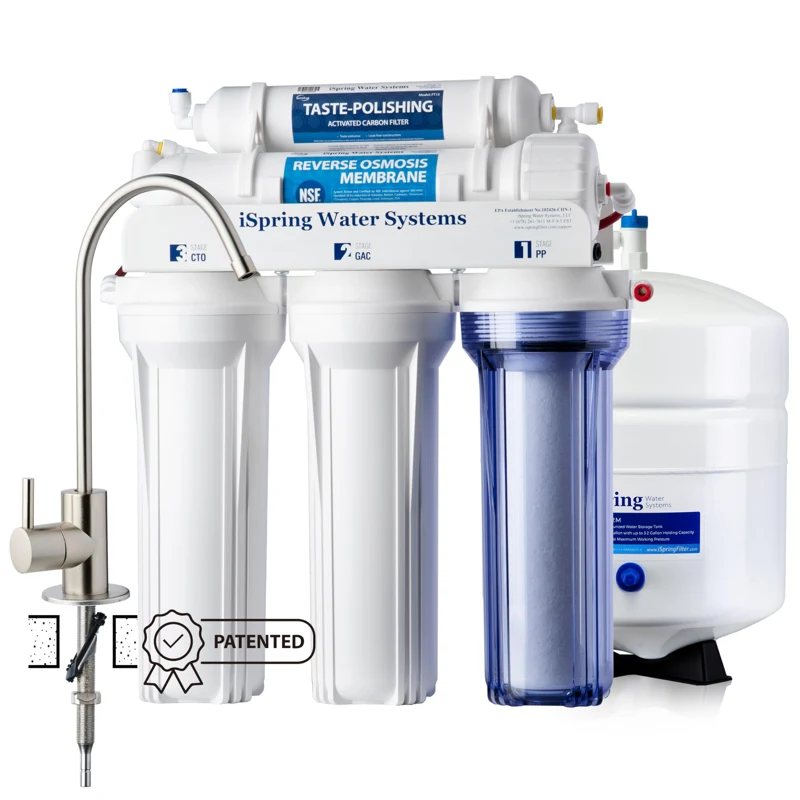
| 6 | ![]() | iSpring RCC7P 5-Stage with Pump Best Value | 9.3 | $380 | Low-pressure homes needing reliable boosted RO filtration | Check Price โ |
| 7 | ![]() | iSpring RO500AK-ORB Oil Rubbed Black Runner-Up | 9.2 | $634 | Buyers wanting RO500AK performance with a darker faucet finish | Check Price โ |
| 8 | ![]() | iSpring RCC7AK NSF 75 GPD Best for Beginners | 9.2 | $320 | First-time RO buyers wanting a straightforward alkaline system | Check Price โ |
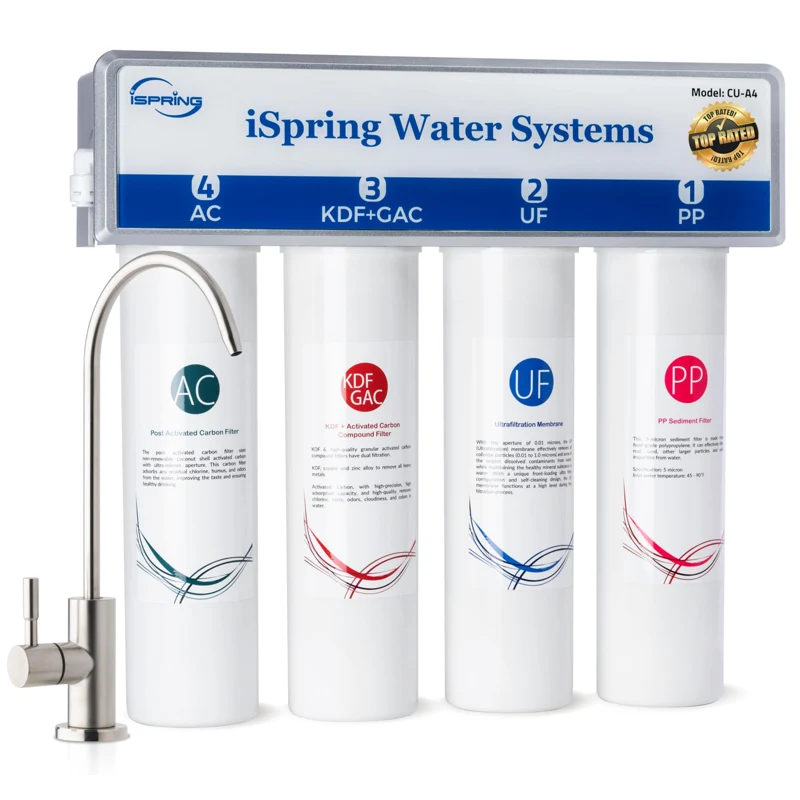
| 9 | ![]() | iSpring CU-A4 4-Stage Ultrafiltration Best Budget | 9.1 | $250 | Cost-conscious buyers who do not need full RO filtration | Check Price โ |
| 10 | ![]() | iSpring RO5004F 500 GPD with UV Best Compact | 9.1 | $330 | Buyers wanting tankless RO plus UV in one under-sink unit | Check Price โ |
Choosing a reverse osmosis water filter is harder than it looks. Systems vary widely in flow rate, drain efficiency, filter stages, and whether they add minerals back after filtration. A slow or wasteful system can frustrate daily use, while one missing key certifications may leave you uncertain about what it actually removes.
The difference between a good and a mediocre RO system comes down to a few measurable factors: certified contaminant reduction, gallons-per-day output, the ratio of purified water to water sent down the drain, and whether the system remineralizes or adjusts pH after the RO membrane does its work.
Flow rate, measured in gallons per day, determines how quickly a system can produce filtered water. Tank-based systems store water in a pressurized reservoir, so output is available immediately but storage space is needed. Tankless systems produce water continuously on demand and typically offer higher GPD ratings, but they require adequate incoming water pressure to perform as rated.
Every RO system sends some water to drain during filtration. A 2:1 ratio means two gallons of purified water are produced for every one gallon wasted. Older or lower-end systems can have ratios of 3:1 or worse. If water costs or conservation matter to you, check the drain ratio before buying, as it affects both utility bills and environmental impact over time.
More stages generally mean more contaminants addressed, but the quality of each stage matters more than the count alone. Look for systems with NSF or SGS certification, which indicates independent testing against defined standards. Alkaline or remineralization stages add minerals back after the RO membrane, which can affect taste. UV stages provide an additional disinfection step beyond what the membrane alone achieves.
Rankings reflect verified owner ratings, number of reviews, price relative to features, filtration stage count, flow rate, drain ratio, certifications noted in the product title, and availability for U.S. buyers in 2026.
A well-certified, fast-filling alkaline RO system with low drain waste and helpful maintenance features, backed by strong owner ratings. Keep in mind: At $625, it costs significantly more than tank-based alternatives.
The highest flow rate system here, suited for households or settings where water demand is consistently high and budget is less of a concern. Keep in mind: At nearly $1,189, it is the most expensive option in this lineup.
A six-stage tank system with a built-in pump and alkaline stage, well-suited for homes where water pressure is a known issue. Keep in mind: Tank-based design requires under-sink storage space for the reservoir.
The most-reviewed system here by a wide margin, offering NSF certification and alkaline remineralization at a mid-range price with a proven track record. Keep in mind: 75 GPD output is slower than tankless systems in this category.
Seven stages including UV disinfection and alkaline remineralization make this a thorough option for buyers who want more than standard RO filtration. Keep in mind: UV lamp will require periodic replacement, adding to long-term cost.
A solid boosted five-stage system at a reasonable price, particularly useful where water pressure is insufficient for standard RO operation. Keep in mind: Five stages without remineralization means no pH adjustment after filtration.
Functionally identical to the top-ranked RO500AK but with an oil rubbed black faucet, making it a style-driven alternative at a marginally higher price. Keep in mind: Priced slightly higher than the brushed nickel version for a finish difference only.
An NSF-certified six-stage alkaline system with a massive owner review base, offering a straightforward entry point into under-sink RO filtration. Keep in mind: Design described as easy to install but lacks a built-in boost pump.
The most affordable system here and the only ultrafiltration option, suitable for buyers who want multi-stage under-sink filtration without the cost of a full RO setup. Keep in mind: Ultrafiltration, not true RO, so TDS reduction differs from RO systems.
A tankless 500 GPD system with UV disinfection and a filter life monitor, offering a capable feature set at a more accessible price than the top-ranked models. Keep in mind: SGS tested rather than NSF certified, which some buyers may prefer.
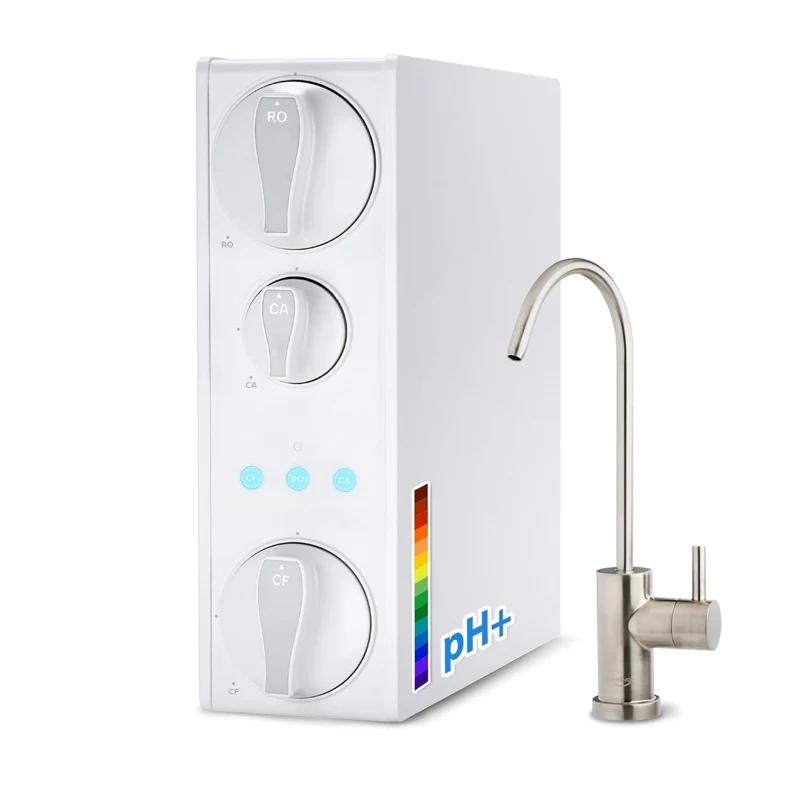
A tank-based system stores filtered water in a pressurized reservoir under the sink, making it available on demand but requiring storage space. A tankless system filters water continuously as you draw it, typically at higher flow rates, but needs sufficient incoming water pressure to work properly.
A 2:1 drain ratio means the system produces two gallons of filtered water for every one gallon sent to drain. Lower drain ratios indicate less water waste. Older RO systems often have ratios of 3:1 or higher, so a 2:1 system is meaningfully more efficient over daily use.
The RO membrane removes most dissolved minerals along with contaminants, which can result in slightly acidic water. An alkaline or remineralization stage adds minerals back after filtration. Whether you want this depends on personal taste preference; it does not affect the core contaminant reduction performance of the RO membrane.
NSF 58 is an independent standard specifically for residential reverse osmosis systems. A system certified to NSF 58 has been tested by a third party to verify that it reduces the contaminants claimed on its label. It provides more assurance than manufacturer-only testing or non-NSF third-party testing.
Replacement intervals vary by stage and water quality. Pre-filters and post-filters are typically replaced every six to twelve months, while the RO membrane often lasts two to three years. Systems with a filter reminder or filter life monitor, as several models here include, help you track when each stage is due for replacement.